Wednesday, 29 March 2017

TO ENCOURAGING TO SPEAK

To encouraging language development is about the quality and quantity of the words we speak but to make the children to talk isn’t about chattering instantly in order to expose them to as many word as possible. To make encouraging the children speak you must first has two way communication from the beginning, it mean we pay attention to their non-verbal signals and listen to their sound and cries. If not sure the children is try to tell, we should wait before reacting and we ask, give the children the time to take our question in and listen again. We have to make every attempt to understand that what the children try to says and show that we interested and try to communication with them.
                After that, we should relax and be patient with the children, mostly parent worries are usually felt by the young child and don’t create the ideal climate for taking big step to speak. Talking takes courage and need to relax, be patient and trust your child’s inborn timetable. Lastly, when babies or toddler seem to talking gibberish, they usually saying word but not in perfect word, so ignoring them babbling back is not respectful to the babies or toddler that as know they try to talk. As example, “You’ve got a lot to say today”.
                The conclusion is that there are many ways to courageous children to speak but many fail to understand the basic and like mostly the children may be little bit late to speak as they wish.

The Meaning Of Children Drawing

The drawings of young children have attracted and interested many professionals in the field of education. Most researchers, psychologist, teacher, and parent have done various researches to clarify the meaning and interpretation of children drawings. Though the process of observing and decode of children’s drawings, the insight can be gained as the social emotional, physical, and intellectual development of each child. Usually children explore the world around them through intellectual, physical and emotional methods and for young children they need pencil, brush, and paper are the best means of express their feeling, hopes, and most profound fears.

The progression of drawings that children make over a period of time can show significant grows and development, as well as determine academic capabilities and skills characteristic over the time. Children begin their drawing process as early as they can physically hold a drawing utensil. From their first attempts at drawing, consisting of random marks and lines, then to their first repsentational drawing, children are making effort to communicate to the world around them and establish meaning through the images they create. It is through drawing that children express their views and interpretation of their experiences through their eyes.

The Effect Of Music

In modern times, scholars and doctors have researched the mysterious power of music, Doctors have found that babies express preference for the same kind of music they heard while in the womb. Music can stimulate the brain’s alpha waves, which creates a sense of calmness in the listener. Other studies shows indicate that early music exposure and instruction have benefits on the development of perceptual skills, which affects language and literary abilities and also related to skills that used to do math fine and lastly motor coordination such as use in dancing choreography and resulting in developing multiple brain neural connections.
            Unlike language, music can active every part of our brain and cell also the structures in motivation and emotion.  it also involves the clinical use of music interventions such as singing, playing, listening, and moving to music to address individual areas of need. It has been proven beneficial in areas of child development; mood disorders; stroke recovery; heart disease; and treatment of neurological disorders such as schizophrenia, Alzheimer’s disease and dementia, amnesia and depression. Lastly, music can make children better in many category and it was proven the scientific report and study show positive result.


Encouraging children to eat vegetables

Encouraging children to eat vegetables can sometimes be a challenge. But vegetables are a vital part of a healthy diet, so it’s important to help your child enjoy them, then here a few tips how to encouraging children to eat vegetables. First, try to keep trying with vegetable, It’s normal for children to say they don’t like vegetables when they first taste them. If the child says that doesn’t like vegetables or doesn’t like a new vegetable, you should keep offering them to her at mealtimes and also keep encouraging her to try and taste them. Over the time, the children will chance their thought about vegetables and eventually eat or like the veggies.
Second that is use praise when your child tries vegetables, some parent love to tease their children when the child is success eating their veggies and thought it will funny but it not. If you praise the children each time she or he eats or tries vegetables, she’s more likely to eat vegetables again. Praise works best when you tell your child exactly what they did well but try not to let praise become the focus of the meal, though. Your aim is to encourage your child to eat vegetables because he likes them, not because he wants praise and rewards from you.

Lastly, Go for variety, taste and fun of different vegetables that is different shapes, colours, textures and tastes. The more variety there is, the more likely it is your child will find something that he’s interested in eating. If you serve new vegetables with food your child enjoys, the entire focus of the meal isn’t on new vegetables. But the most important is always Remember that taste matters.

ALBINISM

Have you ever heard the word albino? It's a word that's sometimes used to describe a condition called albinism (say: AL-buh-nih-zum). Humans, animals, and even plants can have this condition, which means that the person, animal, or plant doesn't have the usual amount of pigment, or color.
You might know that albinism causes a kind of pale appearance. But what exactly causes albinism?

Understanding Albinism


To understand albinism, you need to first know about melanin (say: MEL-uh-nin). Melanin is a chemical in our bodies that colors our skin, eyes, and hair. It's made by melanocytes (say: muh-LAH-nuh-sytes), which are cells found in the bottom layer of your skin.
Sometimes, a kid or an animal might be born whose body can't make a normal amount of melanin. This is what happens with albinism, which can show up as a lack of pigment (color) in the skin, eyes, hair, fur, or feathers of that kid or animal. There are different kinds of albinism. Some kids with albinism might have pale skin or hair. Other types of albinism might affect only the eyes.
Most kids with albinism have blue eyes, and others have brownish eyes. In some cases of albinism, a kid's eyes might appear pink or reddish. This isn't because the iris (the colored part of the eye) is pink or red. It's because the iris actually has very little color. The eyes appear pink or red because the blood vessels inside of the eye (on the retina) show through the iris.

Stay in the Shade


Image result for albinismBesides giving your skin, eyes, and hair its color, melanin helps protect your skin from the sun. You know how a person's skin gets darker after hanging out at the beach? That's your melanin at work, darkening your skin to give it more protection from the sun's rays. So, without enough melanin, your skin won't be able to protect itself. Kids with albinism can get sunburned very easily.
That's why it's a good idea for anyone with albinism to stay covered while in the sun (or even to stay out of the sun completely). Kids with albinism can go to the beach and spend time outdoors, but they have to use lots of sunscreen and watch the amount of time they're soaking up rays. Kids with albinism should talk to their doctors to find out whether it's OK to spend any time in the sun.

Vision Problems


Some kids with albinism wear glasses or contact lenses to help them see better. Others might need eye surgery. An eye doctor can help figure out ways to help a person with albinism see better.
Another problem for kids with albinism is that their eyes can be very sensitive to light. The iris usually helps control the amount of light coming into your eye and hitting your retina, which is located at the back of your eyeball. When a person has albinism, the iris doesn't have enough color and can't properly shield the retina from light. So, kids with albinism often squint in bright light. Wearing sunglasses or tinted contact lenses can help make a kid with albinism more comfortable out in the sun.
Related image

What's Life Like for Someone With Albinism?


Kids with albinism are just like other kids — they just need to talk with their doctor about taking care of their eyes and skin, especially if they're going to be in the sun. And albinism doesn't stop kids from reaching their goals. Lots of kids with albinism have grown up to be doctors, lawyers, musicians, and athletes. Most kids with albinism can be anything they want to be, just like any other kid!
PUBLISHED BY: FARHATUL SYAHIRAH

WHAT IS HYPERACTIVE ?


Image result for HYPERACTIVE KID

When someone says a kid is hyperactive, it can be a sign that the kid might have ADHD. ADHD stands for a condition called attention deficit hyperactivity disorder.
Kids with ADHD have problems paying attention and sitting still in their seats, and they can be impulsive,which means doing things without thinking about the results. This can cause problems like getting hurt. Some kids who have ADHD can have difficulty in school. Some might have trouble making friends.  
ADHD is something a kid is born with. It is not something like the flu that you can catch from someone. A kid has a greater chance of being born with ADHD if he or she has a relative who has ADHD.

What Are the Signs of ADHD?


Image result for HYPERACTIVE KIDADHD can cause kids to act in different ways, depending on the kid who has it. Most kids with ADHD have problems concentrating and paying attention. Some also might have trouble sitting still in class and waiting for their turn. They might yell out the answers before other kids have a chance to raise their hands.
Sometimes they can be disorganized, distracted, or forgetful. They tend to daydream in class. They might lose things and have trouble finishing assignments. They may wiggle around in their seats, move around a lot, talk too much, or interrupt other people's conversations.
It's important to remember that everybody does these things once in a while. If you do them sometimes, it doesn't mean you have ADHD. Kids with ADHD have these problems most or all of the time. This can cause them to have problems both at home and at school.
Kids with ADHD can become worried, frustrated, angry, and sad. Kids need to know that ADHD is a medical problem that can be treated  
 PUBLISHED BY : FARHATUL SYAHIRAH

OVERWEIGHT AND OBESITY

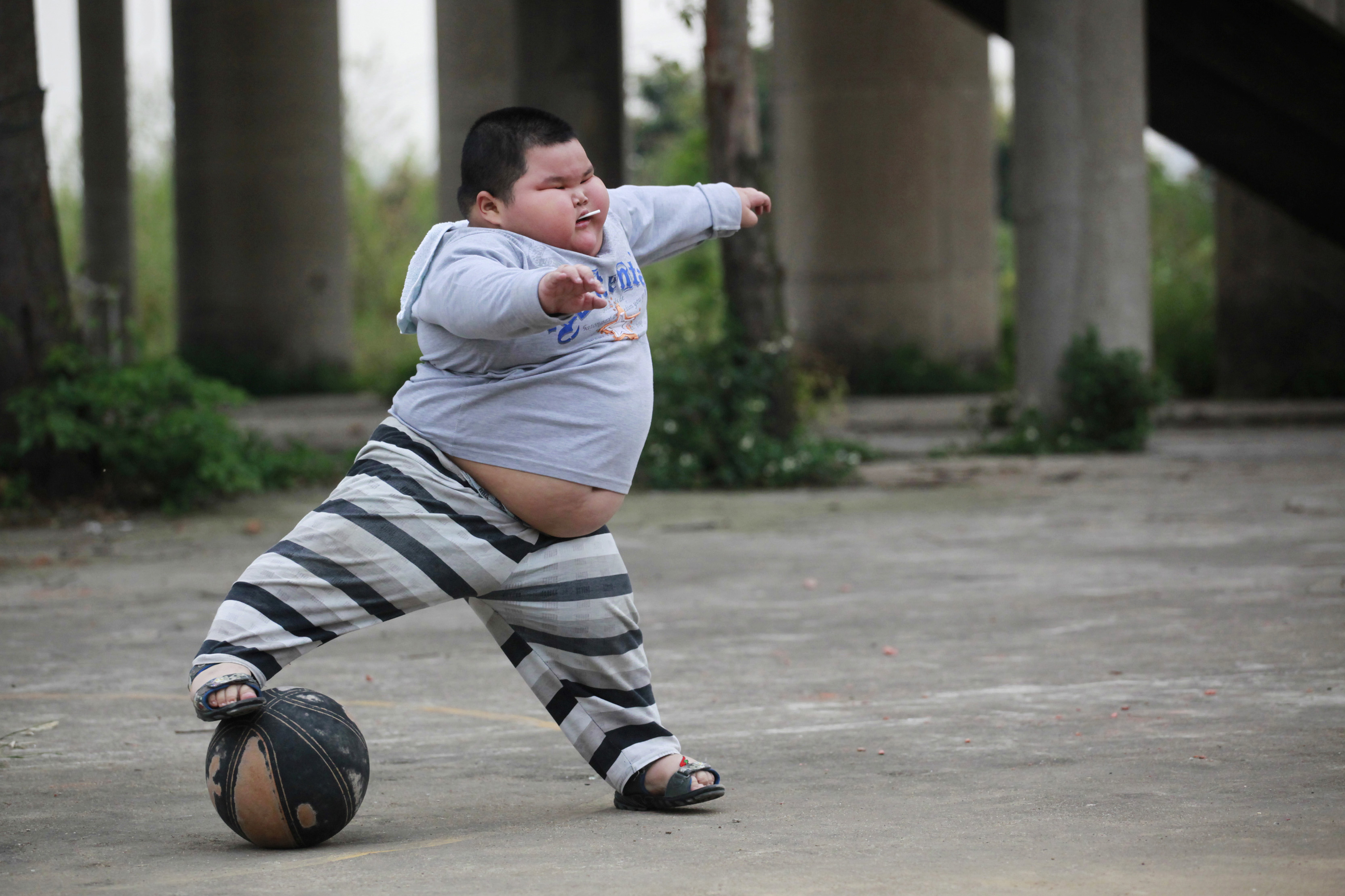
The number of overweight children in the United States has grown at an alarming rate, with 1 out of 3 kids considered overweight or obese.
Many kids are spending less time exercising and more time in front of the TV, computer, phone, tablet, or video-game console. And today's busy families have fewer free moments to prepare nutritious, home-cooked meals. From fast food to electronics, quick and easy is the reality for many of us.
Preventing kids from becoming overweight means making choices in the way your family eats and exercises, and how you spend time together. Helping kids lead healthy lifestyles begins with parents who lead by example. 

The Effects of Obesity

Obesity increases kids' chances of developing medical problems that can affect their present and future health. These include serious conditions like ,type 2 diebetes, high blood pressure, and high cholesterol — all once considered adult diseases. 
Overweight and obese kids are also at risk for:
    Image result for obesity kid
  • bone and joint problems
  • shortness of breath that makes exercise, sports, or any physical activity more difficult and may make asthma symptoms worse or lead kids to develop the condition
  • restless sleep or breathing problems at night, such as  obstructive sleep apnea
  • a tendency to mature earlier (overweight kids may be taller and more sexually mature than their peers, raising expectations that they should act as old as they look, not as old as they are; overweight girls may have irregular menstrual cycles and fertility problems in adulthood)
  • liver and gall bladder disease
Cardiovascular risk factors (including high blood pressure, high cholesterol, and diabetes) that develop in childhood can lead to heart disease, heart failure, and stroke in adulthood. Preventing or treating overweight and obesity in kids may lower their risk of cardiovascular disease as they get older.
Obese kids also might have emotional issues to deal with (such as low self-esteem), and may be teased, bullied, or rejected by peers. Kids who are unhappy with their weight can be more likely than average-weight kids to:
  • develop unhealthy dieting habits and eating disorders, such as anorexia nervosa and bulimia
  • be prone to depression
  • be at risk for substance abuse   

Is My Child Overweight?

Body mass index (BMI) uses height and weight measurements to estimate a person's body fat. But calculating BMI on your own can be complicated. An easier way is to use a BMI calculator.
Once your child's BMI is known, it can be plotted on a standard BMI chart. Kids ages 2 to 19 fall into one of four categories:
  1. underweight: BMI below the 5th percentile
  2. normal weight: BMI at the 5th and less than the 85th percentile
  3. overweight: BMI at the 85th and below 95th percentiles
  4. obese: BMI at or above 95th percentile
BMI calculations aren't used to estimate body fat in babies and young toddlers. For kids younger than 2, doctors use weight-for-length charts to determine how a baby's weight compares with his or her length. Any child who falls at or above the 85th percentile may be considered overweight.
Related imageBMI is not a perfect measure of body fat and can be misleading in some situations. For example, a muscular person may have a high BMI without being overweight (extra muscle adds to body weight — but not fatness). Also, BMI might be hard to interpret during puberty when kids have periods of rapid growth. It's important to remember that BMI is usually a good indicator — but is not a direct measurement — of body fat.
If you're worried that your child or teen may be overweight, make an appointment with your doctor, who will ask about eating and activity habits and make suggestions on how to make positive changes. The doctor also may order blood tests to look for some of the medical problems associated with obesity.
Depending on your child's BMI (or weight-for-length measurement), age, and health, the doctor may refer you to a registered dietitian for additional advice and, possibly, might recommend a comprehensive weight management program.
PUBLISHED BY: FARHATUL SYAHIRAH